When VPN Access Becomes Ransomware in an Hour: Stopping Fog and Akira at Execution
Arctic Wolf tracked 30+ Fog and Akira intrusions that turned SonicWall SSL VPN access into encryption within hours. When the perimeter falls fast, execution control is what's left to stop the payload.
Date: October 24, 2024 Primary Source: Arctic Wolf Labs (Arctic Wolf)
Executive Summary
- What: Arctic Wolf Labs reported increased Fog and Akira ransomware activity in which initial access came through SonicWall SSL VPN accounts, linked to CVE-2024-40766.
- Who is affected: Organizations exposing SonicWall SSL VPN, especially those that had not patched CVE-2024-40766 or rotated potentially exposed VPN credentials.
- Severity: High — 30+ intrusions observed, with VPN access to encryption often occurring within the same day.
- Action required: Patch CVE-2024-40766 and enforce MFA on VPN — and add a default-deny execution layer so the ransomware payload cannot run even after access is achieved.
Overview
On October 24, 2024, Arctic Wolf Labs reported a marked increase in Fog and Akira ransomware intrusions in which the initial access vector was SonicWall SSL VPN. (Arctic Wolf) The activity was linked to CVE-2024-40766, an improper access control vulnerability in SonicWall SonicOS (CVSS 9.3) that SonicWall addressed in August 2024. (Security Affairs)
Arctic Wolf observed more than 30 intrusions between early August and mid-October 2024, with a striking characteristic: the interval between SSL VPN access and ransomware encryption was often within the same day, and the attacks shared common IP infrastructure. (Arctic Wolf) Notably, the researchers did not find definitive evidence of remote code execution exploitation in every case — in some, VPN credentials may have been obtained by other means, such as prior data breaches. (Arctic Wolf)
When attackers can convert perimeter access into encryption in hours, the window for detect-and-respond shrinks dramatically. That makes the execution stage — the moment the encryptor tries to run — a critical place to enforce prevention. White Cloud Security (WCS) Trust Lockdown is built for exactly that point.
Threat Summary
| Field | Detail |
|---|---|
| Threat actors | Fog and Akira ransomware operations |
| Public report | October 24, 2024 (Arctic Wolf Labs) |
| Initial access | SonicWall SSL VPN, linked to CVE-2024-40766 (CVSS 9.3) |
| Observed scope | 30+ intrusions (early Aug–mid-Oct 2024); shared attacker IP infrastructure |
| Notable trait | VPN access to encryption often within the same day |
| Exploited in the wild | Yes |
| Patch available | Yes — SonicWall addressed CVE-2024-40766 in August 2024 |
Technical Analysis
How the Attack Works
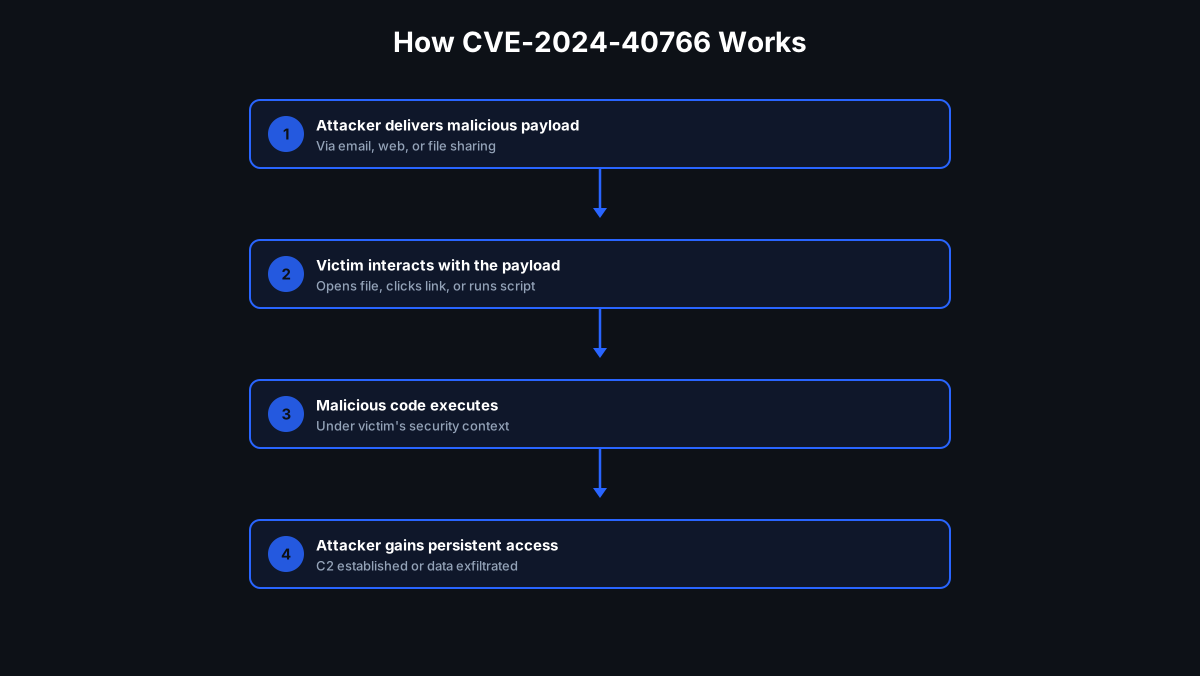
Per Arctic Wolf Labs, the intrusions followed a fast, repeatable pattern: (Arctic Wolf)
- Perimeter access. Attackers gained entry via SonicWall SSL VPN accounts, tied to CVE-2024-40766 (or credentials obtained by other means).
- Rapid movement. With network access established, operators moved quickly toward their objective.
- Encryption. Fog or Akira ransomware was deployed — frequently the same day as initial access.
Payload and Impact
Both Fog and Akira are established ransomware operations that encrypt files and pressure victims with data-theft extortion. The defining risk here is speed: a very short dwell time leaves defenders little room to detect and intervene before encryption begins, which raises the value of controls that act at execution rather than after suspicious behavior accumulates.
Why Traditional Defenses Struggle
- Speed beats response. Same-day encryption can outpace detect-and-respond workflows.
- Valid VPN access looks legitimate. Access via real (if exposed) credentials does not trip access-anomaly alarms reliably.
- Unpatched edge devices remain a durable entry point long after a fix ships.
- Established ransomware families still evolve binaries, limiting signature-only blocking.
How White Cloud Security Trust Lockdown Stops This
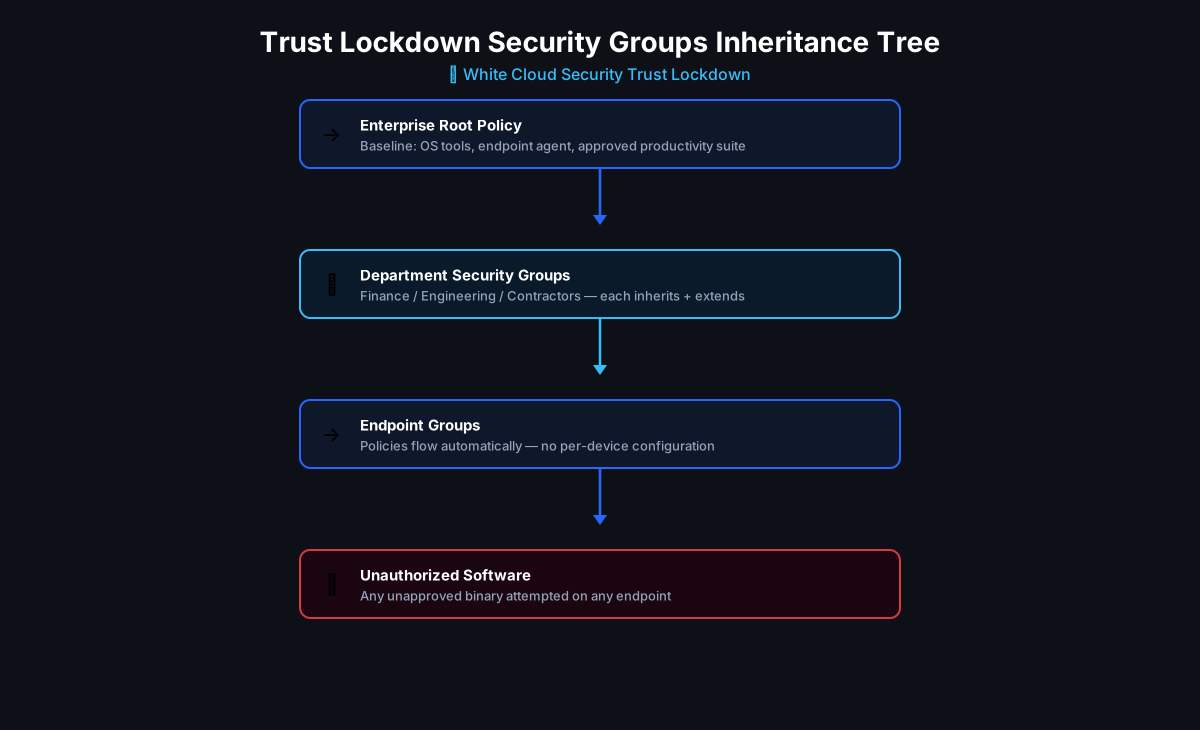
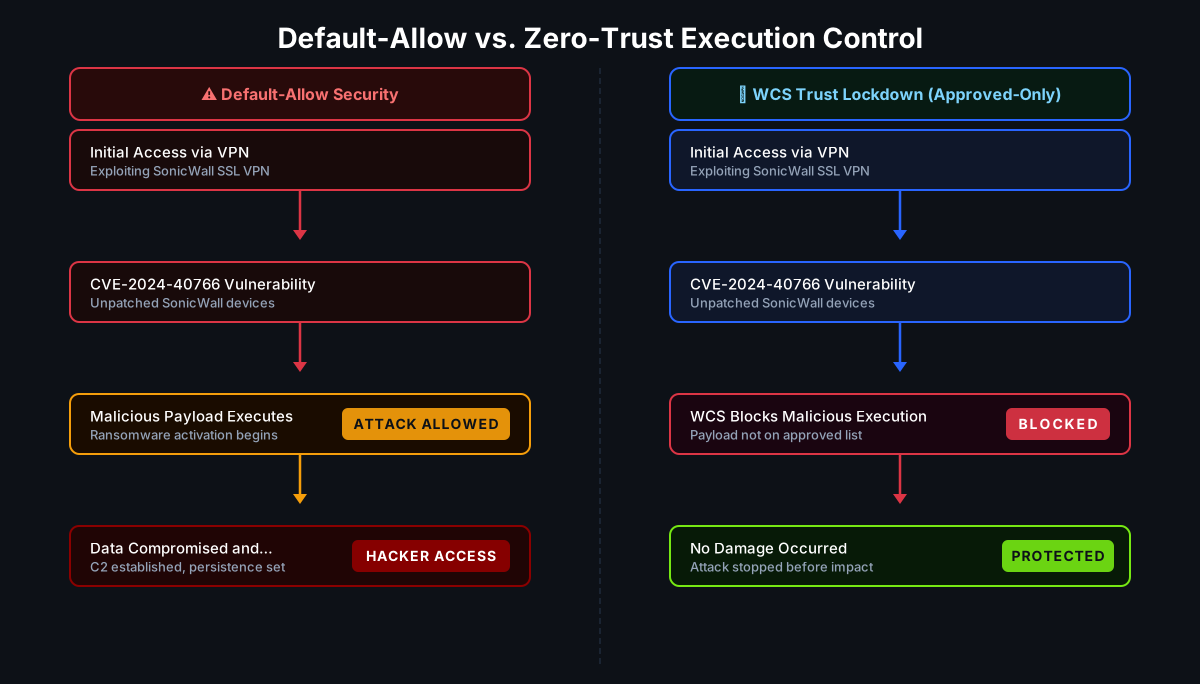
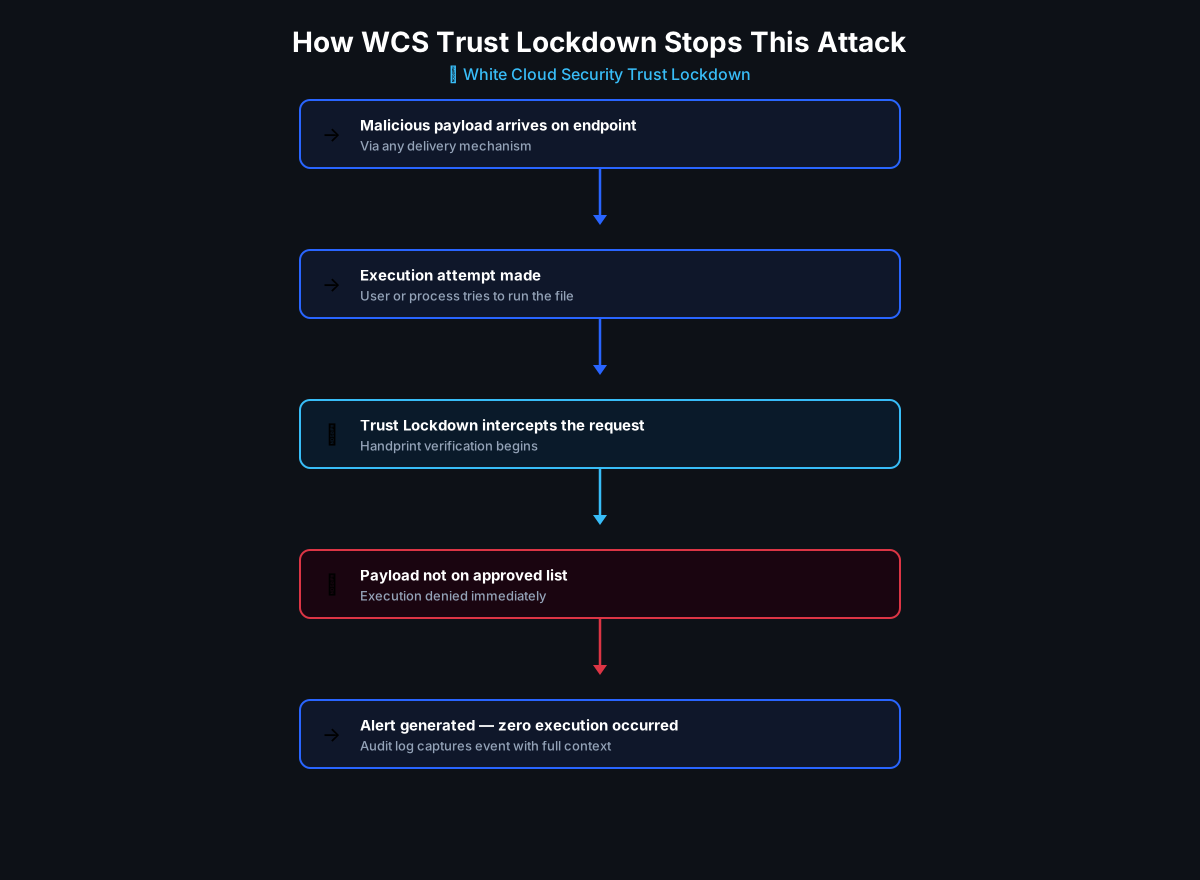
WCS Trust Lockdown enforces a default-deny, Zero-Trust App Firewall: nothing executes unless it has been explicitly Approved by application, publisher/certificate, handprint, and approved parent-child relationship.
| Attack step | How WCS would help |
|---|---|
| Access via SonicWall SSL VPN | WCS does not control the VPN, but it changes what an attacker can do after access |
| Staging tools on a host | Unapproved utilities and remote-access tools would be denied execution |
| Fog/Akira encryptor launches | The unknown encryptor would be prevented from running — no signature required |
| Evolved/renamed binary | Handprint identity (SHA-1, SHA-256, SHA-512, MD5, CRC32, file length) means a changed hash would still be denied |
Even when attackers hold valid VPN access, WCS would help block the ransomware payload from executing and would contain the risk of unknown software introduced during a fast intrusion — while giving administrators visibility into blocked applications. Because the control acts at execution time, it does not depend on detecting the intrusion quickly enough.
Stated plainly: WCS does not patch CVE-2024-40766, enforce VPN MFA, or fix credential exposure — those remain essential. WCS is the preventive execution-control layer that complements them, so that perimeter access does not automatically become encrypted files.
At White Cloud Security, we continue to track and report new hacking methods and tools — not just because of their immediate threat, but because patterns of reuse often expose the playbooks of these cybercriminal groups.
Recommended Mitigations
- Patch CVE-2024-40766 on SonicWall devices and follow SonicWall's guidance to rotate potentially exposed credentials.
- Enforce MFA on all VPN and remote access.
- Add default-deny application control so ransomware payloads cannot execute even after access.
- Segment networks and apply least privilege to slow same-day escalation.
- Maintain tested, offline/immutable backups.
Indicators of Compromise
Source: Arctic Wolf Labs. Specific IOCs were limited at report time; the key technical indicator is the initial-access vector below. Do not treat IOCs as a substitute for execution control. (Arctic Wolf)
| Indicator | Type |
|---|---|
| CVE-2024-40766 (SonicWall SonicOS) | Initial-access vulnerability |
| Shared attacker IP infrastructure (per Arctic Wolf) | Network |
Key Takeaways
- Speed is the weapon. Same-day VPN-to-encryption shrinks the detect-and-respond window.
- Patch and MFA the edge — and don't stop there.
- Execution control acts when speed defeats detection, blocking the payload at launch.
- Handprint identity denies evolved ransomware binaries that defeat signatures.
References
- Arctic Wolf Labs — Arctic Wolf Labs Observes Increased Fog and Akira Ransomware Activity Linked to SonicWall SSL VPN (Arctic Wolf)
- Security Affairs — Fog and Akira ransomware attacks exploit SonicWall VPN flaw (Security Affairs)
Further Reading
- Casio Ransomware Attack: Why Stopping the Encryptor Beats Cleaning Up After It
- Embargo Ransomware Brings Its Own EDR Killer — Default-Deny Blocks It First