Helldown Ransomware Exploits Zyxel Firewalls: Containing the Payload at Execution
Sekoia tied the emerging Helldown operation to Zyxel firewall exploitation, with Windows and Linux/VMware encryptors. When the edge is breached, execution control is what stops the encryptor.
Date: November 18, 2024 Primary Source: Sekoia (Sekoia) · BleepingComputer (BleepingComputer)
Executive Summary
- What: Helldown is an emerging ransomware operation that Sekoia linked (medium confidence) to exploitation of Zyxel firewalls for initial access, with both Windows and Linux/VMware ESXi encryptors.
- Who is affected: Primarily small and medium-sized firms in the U.S. and Europe; ~31 victims were listed on Helldown's leak site as of early November 2024.
- Severity: High — edge-device exploitation leading to data theft and encryption, including virtualization hosts.
- Action required: Patch Zyxel firewalls and add a default-deny execution layer so the encryptor cannot run even after a perimeter breach.
Overview
In November 2024, Sekoia published an overview of the emerging Helldown ransomware, reporting with medium confidence that the group breaches networks by exploiting Zyxel firewalls. (Sekoia) Helldown was first documented in August 2024 and again in October, and by November 7, 2024 had listed ~31 victims — mostly SMBs in the U.S. and Europe — on its renewed extortion portal. (BleepingComputer)
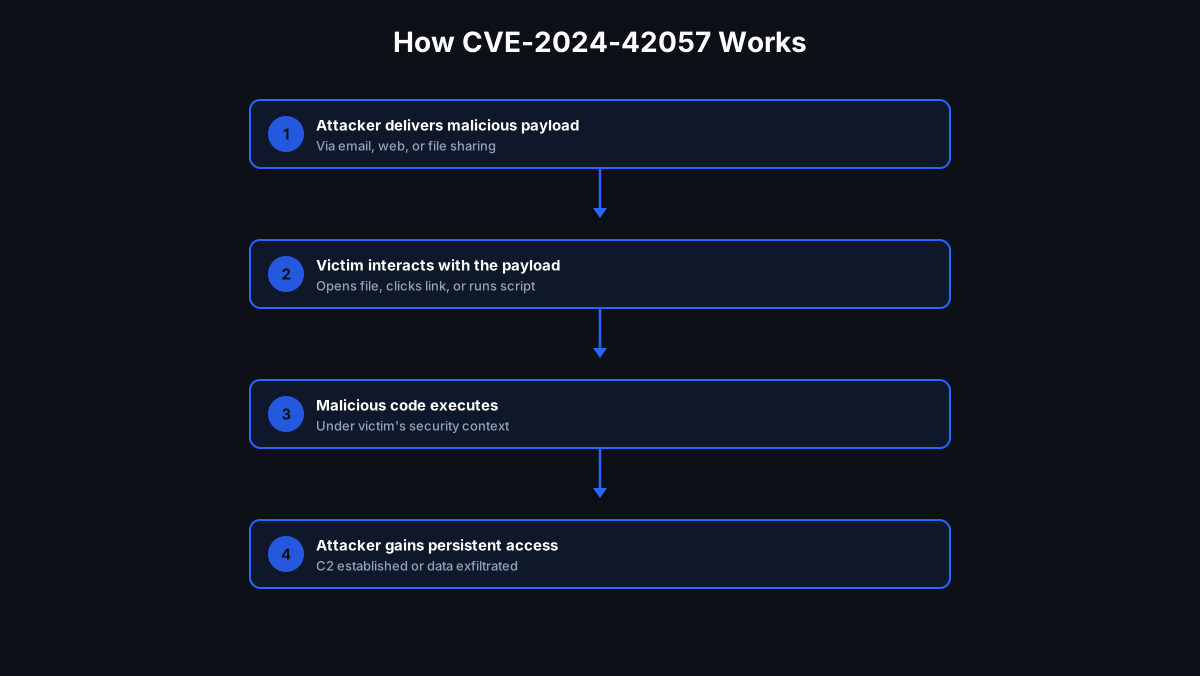
Sekoia hypothesized the group may be abusing CVE-2024-42057 (a command-injection flaw in Zyxel IPSec VPN) and possibly an additional undocumented Zyxel issue; Zyxel later tracked a directory-traversal flaw as CVE-2024-11667. (BleepingComputer) (SecurityWeek) Helldown has both Windows and Linux encryptors, with the Linux variant targeting VMware ESXi environments. (Sekoia)
The lesson mirrors other edge-device intrusions: patching the firewall is essential, but if access is achieved anyway, the decisive moment is whether the encryptor is allowed to run. That is the control White Cloud Security (WCS) Trust Lockdown provides.
Threat Summary
| Field | Detail |
|---|---|
| Malware family | Helldown ransomware (emerging) |
| Public report | November 2024 (Sekoia); ~31 victims by Nov 7 |
| Initial access | Zyxel firewall exploitation (CVE-2024-42057; also CVE-2024-11667) — medium confidence |
| Platforms | Windows and Linux (Linux variant targets VMware ESXi) |
| Victims | ~31 listed; mostly SMBs in the U.S. and Europe |
| Behavior | Data theft + encryption (double extortion) |
| Patch available | Zyxel fixes available (e.g., firmware 5.39 for CVE-2024-42057) |
| Exploited in the wild | Yes |
Technical Analysis
How the Attack Works
Per Sekoia and corroborating reporting: (Sekoia) (BleepingComputer)
- Edge exploitation. The group breaches networks via Zyxel firewall vulnerabilities (suspected CVE-2024-42057, possibly an additional flaw).
- Foothold and movement. Attackers establish access and move toward high-value systems.
- Data theft. Files are exfiltrated for double extortion and leak-site pressure.
- Encryption. The Helldown encryptor (Windows or Linux/ESXi) locks systems — the ESXi focus threatens entire virtualization estates.
Payload and Impact
Targeting VMware ESXi means a single successful encryptor run can take down many virtual machines at once, magnifying downtime. Combined with data theft, Helldown poses both operational and data-exposure risk to SMBs that may lack deep recovery capabilities.
Why Traditional Defenses Struggle
- Edge devices are durable entry points, especially where patches lag or n-day exploits are private.
- Post-breach activity can look administrative as attackers move toward hypervisors.
- ESXi encryptors operate on appliances where traditional endpoint agents may not run.
- An emerging family can evade signatures and rebuild binaries.
How White Cloud Security Trust Lockdown Stops This
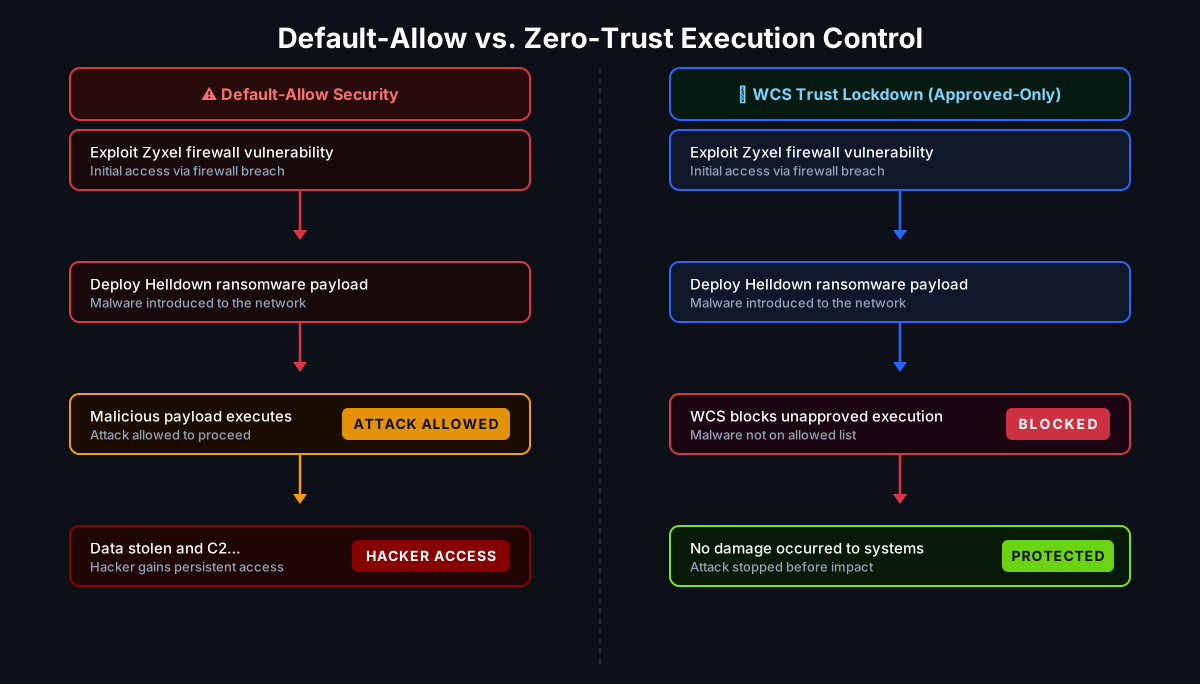
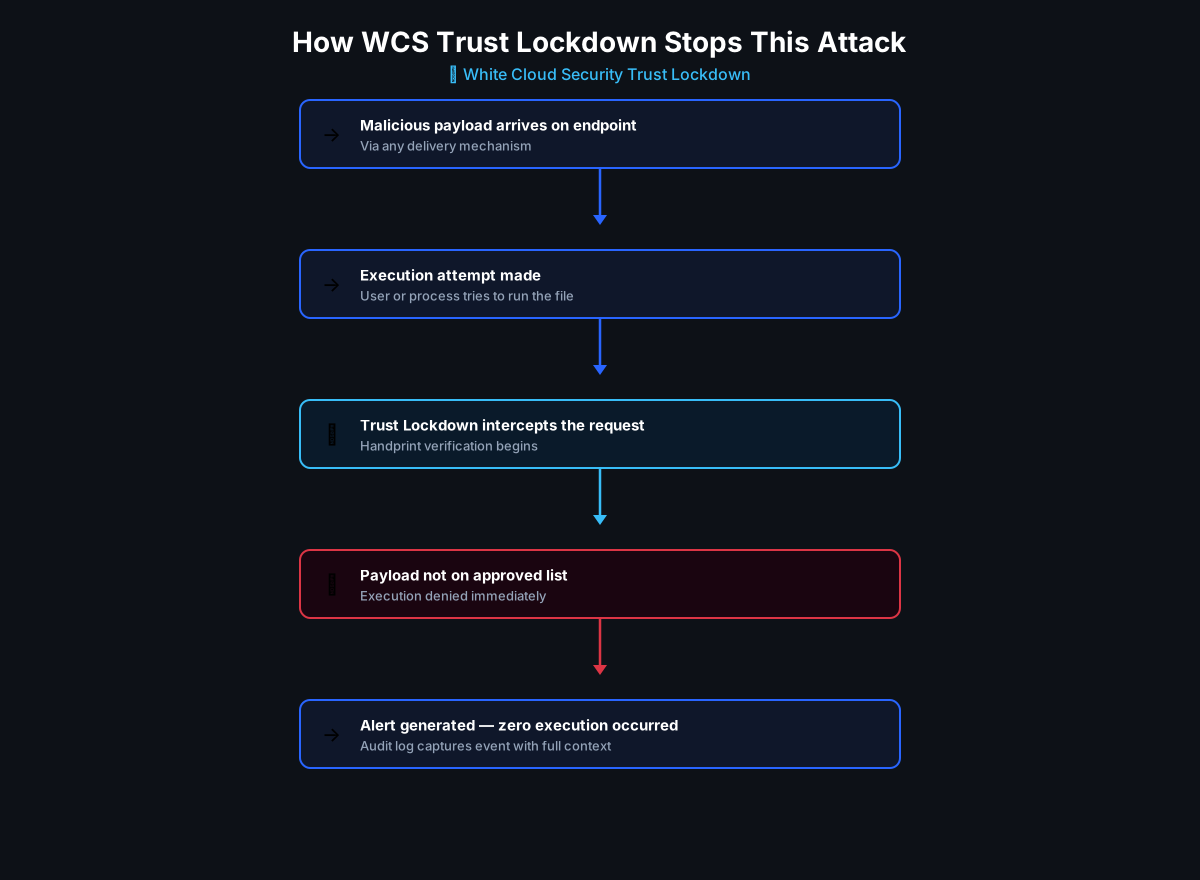
WCS Trust Lockdown enforces a default-deny, Zero-Trust App Firewall: nothing executes unless it has been explicitly Approved by application, publisher/certificate, handprint, and approved parent-child relationship.
| Attack step | How WCS would help |
|---|---|
| Zyxel firewall exploited for access | WCS does not control the firewall, but it changes what runs after access |
| Tooling staged on reachable hosts | Unapproved utilities would be denied execution on protected endpoints/servers |
| Helldown encryptor launches | The unknown encryptor would be prevented from running on protected systems — no signature required |
| Rebuilt binary | Handprint identity (SHA-1, SHA-256, SHA-512, MD5, CRC32, file length) means a changed hash would still be denied |
WCS would help contain the risk of unknown software introduced after a perimeter breach and would give administrators visibility into blocked applications. Scope note: protection applies where WCS is deployed; appliance-level targets like ESXi still require their own hardening and patching. WCS does not patch CVE-2024-42057/CVE-2024-11667 or replace network controls, EDR, and backups — it complements them as a preventive execution-control layer.
At White Cloud Security, we continue to track and report new hacking methods and tools — not just because of their immediate threat, but because patterns of reuse often expose the playbooks of these cybercriminal groups.
Recommended Mitigations
- Patch Zyxel firewalls (apply firmware addressing CVE-2024-42057 and CVE-2024-11667) and follow vendor guidance.
- Deploy default-deny application control so encryptors cannot run on protected hosts.
- Harden VMware ESXi (lockdown mode, restricted access, current patches) and protect management interfaces.
- Segment networks to slow movement from edge to hypervisor.
- Maintain tested, offline/immutable backups, including for virtualization estates.
Key Takeaways
- Patch the edge — then assume breach. Execution control is the next line.
- ESXi-targeting ransomware can take down many VMs at once; protect and segment virtualization.
- Handprint identity denies rebuilt encryptors that defeat signatures.
- Prevention complements patching, network controls, EDR, and backups.
References
- Sekoia — Helldown ransomware: an overview of this emerging threat (Sekoia)
- BleepingComputer — Helldown ransomware exploits Zyxel VPN flaw to breach networks (BleepingComputer)
- SecurityWeek — Recent Zyxel Firewall Vulnerability Exploited in Ransomware Attacks (SecurityWeek)